
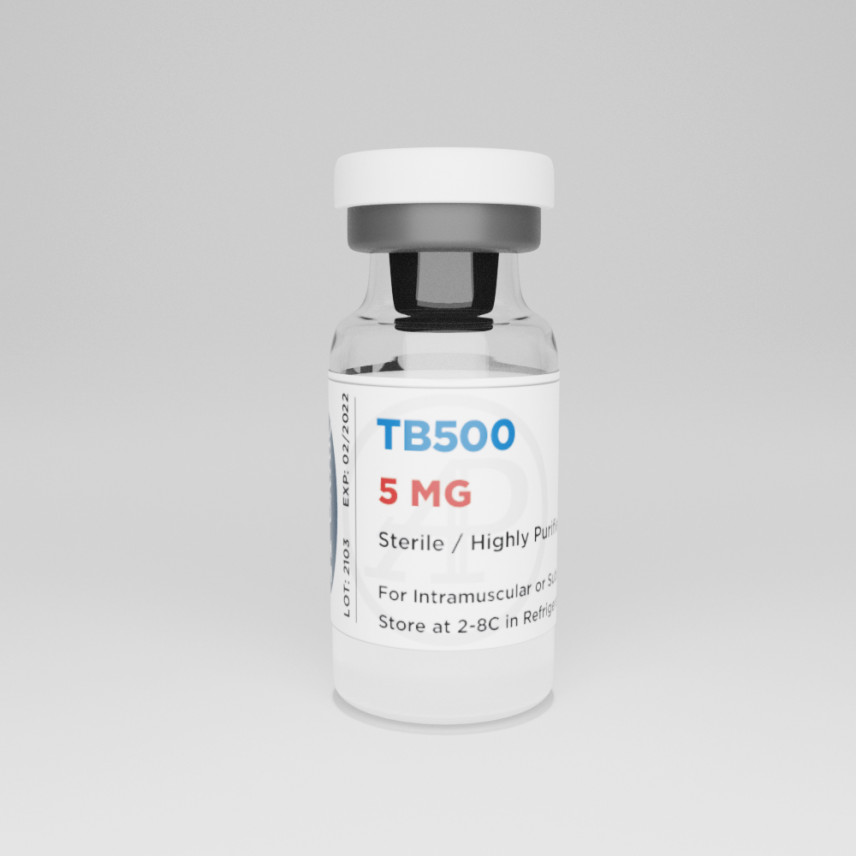
Description
Thymosin Beta-4 acetate is a synthetic, stabilized form of the naturally occurring regenerative peptide Thymosin Beta-4. It is a key orchestrator of cellular repair, migration, and regeneration, specifically renowned for its potent effects on accelerating the healing of muscles, tendons, ligaments, and other soft tissues by promoting cell migration, reducing inflammation, and increasing flexibility.
Mechanism of Action
The mechanism of action for Thymosin Beta-4 acetate is centered on its role as a master regulator of actin, a fundamental protein in the cellular cytoskeleton. By binding to actin, Thymosin Beta-4 acetate promotes cell migration (chemotaxis) to the site of injury, which is the critical first step in tissue repair. It also upregulates the production of cell-building proteins like collagen and metalloproteinases, promotes the formation of new blood vessels (angiogenesis), and exhibits powerful anti-inflammatory properties by inhibiting key inflammatory cytokines. This multi-pronged approach makes it uniquely effective at initiating and accelerating the body’s intrinsic healing processes.
Clinical Application and Dosage
Thymosin Beta-4 acetate is a research peptide with investigational applications in wound healing, cardiac repair, and ocular injuries. In experimental and performance contexts, Thymosin Beta-4 acetate is primarily used to treat acute musculoskeletal injuries—such as sprains, tears, and tendonitis—and to improve joint flexibility and recovery from intense training.
Dosage of Thymosin Beta-4 acetate follows a “loading” and “maintenance” protocol due to its systemic, long-lasting effects. A common research regimen involves a loading phase of 5 mg to 10 mg per week, administered via subcutaneous injection in divided doses (e.g., 2.5 mg twice weekly) for 2-4 weeks. This is followed by a lower maintenance dose of 2.5 mg to 5 mg per week or every other week. The 5 mg vial of Thymosin Beta-4 acetate is a standard single or bi-weekly dose and must be reconstituted with bacteriostatic water and stored refrigerated.
Treatment Protocol and Monitoring
A healing cycle with Thymosin Beta-4 acetate typically spans 4 to 8 weeks. Its effects are systemic, meaning the injection site does not need to be near the injury. Improvements in mobility, reduced pain, and decreased swelling can often be observed within the first few weeks of treatment. Monitoring is based on the symptomatic and functional improvement of the injury, such as increased range of motion, reduced pain on palpation, and a faster return to activity.
Pharmacological Profile
Thymosin Beta-4 acetate is distinguished by its acetylated structure, which enhances its stability and half-life compared to the endogenous peptide. It has a long half-life of several days, allowing for infrequent dosing. Its effects are entirely systemic, circulating throughout the body to locate and act on areas of inflammation and damage. Proper reconstitution and cold storage are critical to maintain its peptide structure.
Common Side Effects
Thymosin Beta-4 acetate is generally well-tolerated in research settings with a low incidence of side effects, largely due to its role as a signaling molecule that enhances natural processes. The most commonly noted observations include:
- Minimal to No Side Effects: Most users report no adverse effects at standard doses.
- Mild, Transient Fatigue: A small subset of users report feeling slightly fatigued after higher doses.
- Local Injection Site Reactions: Minor redness, itching, or discomfort is possible.
- Enhanced Hair and Nail Growth: A reported secondary effect due to increased keratinocyte migration and angiogenesis.
- Theoretical Angiogenesis Concern: As a potent promoter of blood vessel growth, there is a theoretical risk of stimulating undesirable angiogenesis (e.g., in undiagnosed tumors), though no such human cases have been documented.
Due to its systemic healing action, Thymosin Beta-4 acetate is considered a highly valuable and safe research compound for tissue repair. It is often used in tandem with Body Protection Compound (BPC-157) for a comprehensive healing strategy. There are no known contraindications aside from a theoretical caution for individuals with active cancer.
You can buy Thymosin Beta-4 acetate (TB-500) made by Apoxar in bulk in Canada via our website. Navigate to the “Purchase” tab and fill the contact form with details of your wholesale order. Please note: we do not sell single packs or ship directly to consumers, Apoxar is a wholesale fitness medication manufacturer and we work exclusively with our approved distributors.