
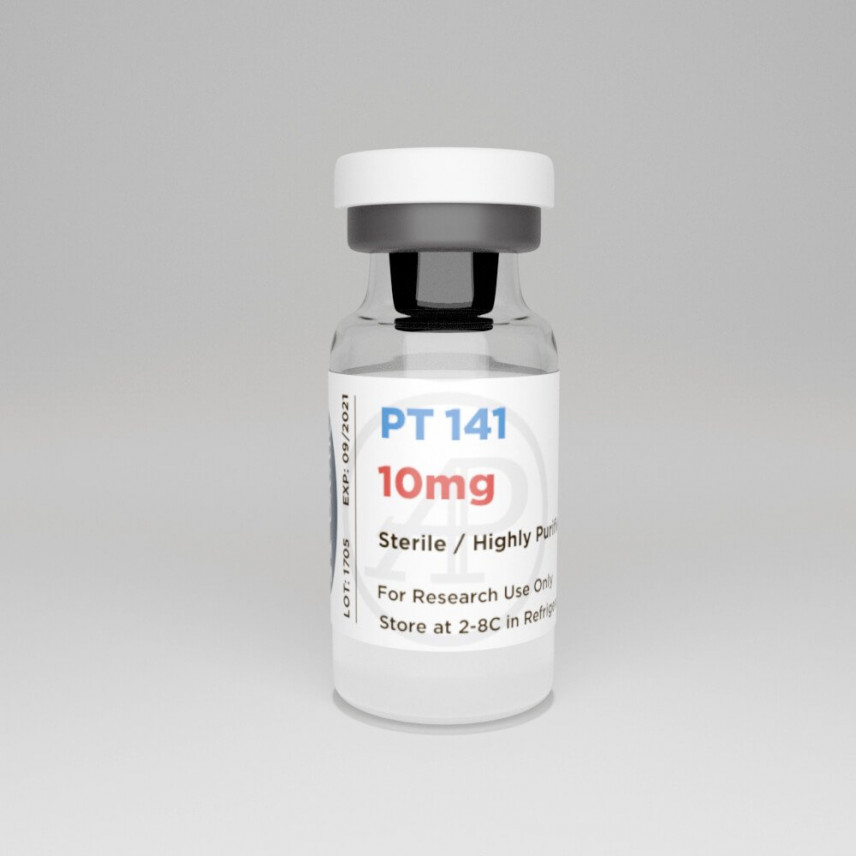
Description
PT-141 is a synthetic peptide and a melanocortin receptor agonist, primarily known for its ability to stimulate sexual arousal and function in both men and women. Unlike traditional treatments for sexual dysfunction that act on the vascular system (like PDE5 inhibitors), PT-141 works centrally in the brain by activating pathways that govern sexual desire, making it a unique agent for addressing low libido and arousal disorders.
Mechanism of Action
The mechanism of action for PT-141 involves binding to and activating melanocortin receptors in the central nervous system, specifically the MC4R and MC1R subtypes. This activation triggers a cascade within the hypothalamic region of the brain that is responsible for regulating sexual arousal and desire. By stimulating these neural pathways, PT-141 can induce sexual interest and arousal without directly causing vasodilation, distinguishing it from medications like sildenafil (Viagra). Its effects are centrally mediated, focusing on the psychological and excitatory components of the sexual response.
Clinical Application and Dosage
PT-141 has received regulatory approval in some regions for the treatment of hypoactive sexual desire disorder (HSDD) in premenopausal women. In off-label and research contexts, it is used by both men and women to enhance libido and address arousal difficulties, including those potentially caused by psychiatric medications.
Dosage of PT-141 is administered via subcutaneous injection. For clinical use in women, the approved dose is 1.75 mg. In broader research and performance contexts, common doses range from 1 mg to 2 mg, taken on an as-needed basis approximately 4-6 hours prior to anticipated sexual activity. The 10 mg vial of PT-141 contains multiple doses and must be reconstituted with bacteriostatic water and stored refrigerated.
Treatment Protocol and Monitoring
PT-141 is used on an intermittent, as-needed basis rather than a daily regimen. Its effects are not immediate, with a typical onset of action between 4 to 6 hours post-injection, and can last for up to 24 hours. Monitoring is largely subjective, focusing on the efficacy in improving desire and arousal, as well as tolerance to side effects. Blood pressure should be monitored due to its potential hypertensive effect.
Pharmacological Profile
PT-141 is a metabolically stable analog of the endogenous hormone α-MSH. It is administered subcutaneously and has a half-life that allows for its effects to last many hours. Once reconstituted, the peptide solution is stable for a limited time when refrigerated. It does not require daily dosing and has no known potential for addiction or dependency.
Common Side Effects
The use of PT-141 is associated with a range of side effects, some of which are relatively common. The most frequently reported include:
-
- Nausea: The most common side effect, which can be mild to moderate and often diminishes with subsequent uses.
- Facial Flushing: A feeling of warmth and reddening of the skin, particularly in the face and neck.
- Increased Blood Pressure: A transient rise in blood pressure can occur shortly after injection.
- Headache: Reported by a subset of users.
GHRP-6 (Growth Hormone-Releasing Peptide-6) is a synthetic hexapeptide and a potent secretagogue, meaning it stimulates the secretion of endogenous growth hormone (GH) from the pituitary gland. It is distinguished not only by its ability to significantly elevate GH levels but also by its strong stimulatory effect on appetite, making it a compound of interest in both performance enhancement and specific therapeutic research contexts.
Mechanism of Action
The mechanism of action for GHRP-6 involves binding to the ghrelin receptor (GHSR-1a) in the hypothalamus and pituitary gland. This action mimics the natural hormone ghrelin, triggering a powerful release of growth hormone. Unlike exogenous GH administration, GHRP-6 works synergistically with the body’s own Growth Hormone-Releasing Hormone (GHRH) and helps overcome the negative feedback of somatostatin. Importantly, GHRP-6 also potently stimulates hunger by acting on hypothalamic feeding centers, a side effect that is often utilized therapeutically.
Clinical Application and Dosage
While not broadly approved for widespread clinical use, GHRP-6 has been studied for conditions like cachexia (wasting syndrome), growth hormone deficiency, and to improve recovery. In performance and physique enhancement, GHRP-6 is used to elevate endogenous GH levels for its fat-loss, recovery, and potential anabolic benefits, with the appetite stimulation being a secondary or primary goal depending on the user’s aims.
Dosing of GHRP-6 is based on research protocols and typically involves subcutaneous injection. Common doses range from 100 mcg to 300 mcg, administered two to three times per day. Dosing is often timed pre-meals to leverage the appetite effect, or post-workout and before bed to coincide with natural GH pulses. The 5 mg vial of GHRP-6 provides multiple doses and must be reconstituted with bacteriostatic water and stored refrigerated.
Treatment Protocol and Monitoring
Cycles with GHRP-6 can vary from short-term (e.g., for appetite stimulation during a mass phase) to longer-term protocols (several months) for sustained GH benefits. Due to its short half-life, multiple daily injections are standard. Monitoring is largely symptom-based, focusing on recovery, sleep quality, fat loss, and managing the significant hunger. Users may also monitor for signs of elevated GH/IGF-1 side effects, such as joint pain or water retention.
Pharmacological Profile
GHRP-6 is a small peptide with a very short half-life of approximately 15-30 minutes, necessitating frequent administration to maintain elevated GH pulses. It is administered via subcutaneous injection. After reconstitution, it must be kept refrigerated to maintain stability. Its effects are pulsatile, mimicking the body’s natural GH secretion pattern more closely than exogenous GH injections.
Common Side Effects
The use of GHRP-6 is associated with a specific set of side effects related to its mechanism. The most common include:
-
-
- Intense Hunger: A profound and often immediate increase in appetite, which can be undesirable during cutting phases.
- Flushing and Headache: A transient warm, flushed feeling or mild headache post-injection.
- Tingling in Extremities: A mild, transient sensation reported by some users.
- Carpal Tunnel Syndrome & Joint Aches: Symptoms associated with elevated GH and IGF-1 levels, similar to but often milder than those from exogenous GH.
- Water Retention: Mild peripheral edema can occur.
- Fatigue/Drowsiness: Some users report feeling tired after administration, especially at higher doses.
-
Potential long-term risks of chronically elevated GH/IGF-1 levels, such as insulin resistance or acromegaly-like symptoms with extreme misuse, are a concern. Its safety profile with long-term use is not fully established.
You can buy GHRP-6 made by Apoxar in bulk in Canada via our website. Navigate to the “Purchase” tab and fill the contact form with details of your wholesale order. Please note: we do not sell single packs or ship directly to consumers, Apoxar is a wholesale fitness medication manufacturer and we work exclusively with our approved distributors.