
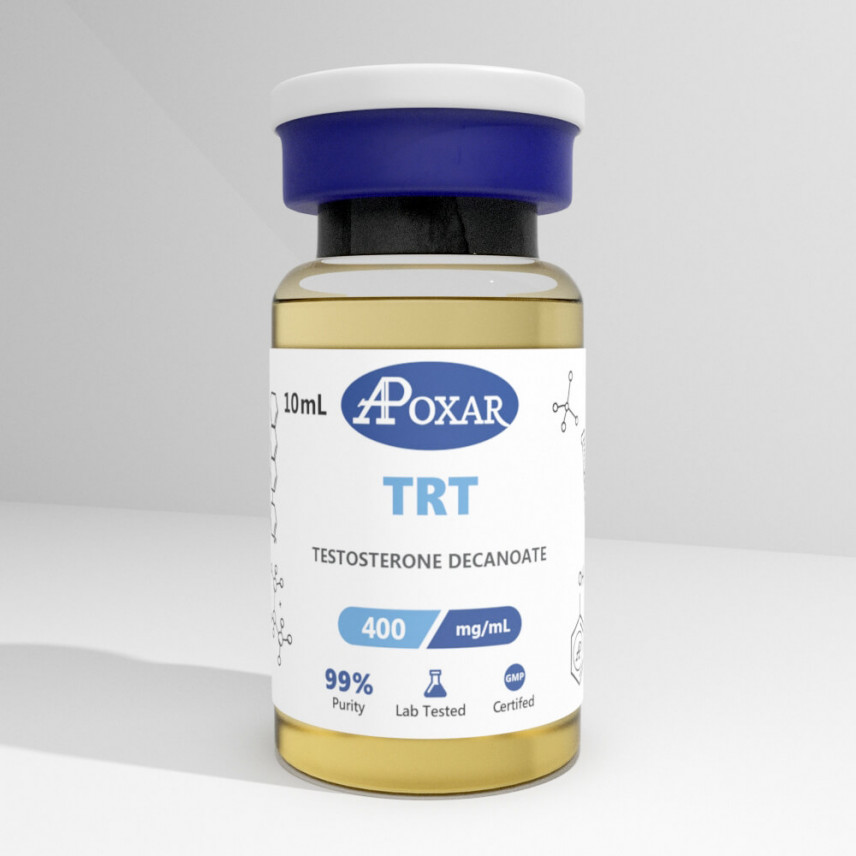
Description
Testosterone Decanoate is a long-acting injectable ester of the primary male sex hormone, testosterone. It is a key component in many testosterone replacement therapy (TRT) protocols and performance-enhancing cycles, prized for its extended release profile which allows for less frequent injections while maintaining stable physiological or supraphysiological hormone levels.
Mechanism of Action
This compound functions as a prodrug, releasing free testosterone into the bloodstream after enzymatic cleavage of the decanoate ester. The active testosterone then binds to androgen receptors throughout the body, initiating genomic and non-genomic effects. This includes stimulating protein synthesis in muscle tissue, promoting bone mineral density, regulating libido and mood, and supporting erythropoiesis. Like all testosterone esters, it is subject to metabolism by aromatase into estradiol and by 5-alpha reductase into dihydrotestosterone (DHT).
Clinical Application and Dosage
The primary clinical application of Testosterone Decanoate is in testosterone replacement therapy for men diagnosed with hypogonadism. Its long half-life makes it particularly suitable for protocols aiming to minimize injection frequency, often used in conjunction with shorter esters in blended formulations.
In a therapeutic context, dosage is strictly individualized based on baseline serum testosterone levels and clinical response. Doses typically range from 150 mg to 400 mg administered via deep intramuscular injection every 2 to 4 weeks, though more frequent, smaller doses are increasingly common to avoid peaks and troughs. The 400 mg/mL concentration allows for a lower injection volume.
Treatment Protocol and Monitoring
A TRT protocol using Testosterone Decanoate requires long-term commitment. Steady-state blood levels are achieved after several administrations due to the ester’s long half-life. Mandatory monitoring includes regular blood tests to assess total and free testosterone, estradiol, hematocrit, lipid profile, and prostate-specific antigen (PSA). The goal is to maintain levels within a healthy physiological range and mitigate side effects.
Pharmacological Profile
Testosterone Decanoate’s key pharmacological feature is its extended release profile, conferred by the long-chain decanoate ester. It has an estimated half-life of approximately 15-20 days, one of the longest among common testosterone esters. It is administered via intramuscular injection in an oil base and is metabolized primarily in the liver, with excretion of metabolites in urine.
Common Side Effects
Side effects are related to the pharmacological action of testosterone and are dose-dependent. The most common include:
- Estrogenic Effects: Water retention, gynecomastia, and increased blood pressure due to aromatization.
- Androgenic Effects: Acne, oily skin, and accelerated hair loss in predisposed individuals.
- Suppression of HPTA: Complete shutdown of endogenous testosterone production.
- Polycythemia: A potentially significant rise in red blood cell count (hematocrit).
- Negative Lipid Impact: Tendency to decrease HDL (“good”) cholesterol.
Serious risks with improper use include exacerbation of sleep apnea, benign prostatic hyperplasia, and increased cardiovascular strain. It is contraindicated in men with prostate or breast cancer.
You can buy Testosterone Decanoate made by Apoxar in bulk in Canada via our website. Navigate to the “Purchase” tab and fill the contact form with details of your wholesale order. Please note: we do not sell single packs or ship directly to consumers, Apoxar is a wholesale fitness medication manufacturer and we work exclusively with our approved distributors.